A long, almost mournful groan on the out-breath, night after night — heard by a partner, unknown to the sleeper. It has a name, and it is not snoring.
8 min read · General wellness information, not a medical diagnosis · Auf Deutsch lesen →
The short answer
Catathrenia is nocturnal groaning: a long, monotone groan made on the out-breath during sleep, usually harmless and unnoticed by the sleeper. The key thing that tells it apart from snoring is direction — catathrenia rides the exhale and sounds vocal, while snoring rides the inhale and sounds like vibration. It is worth checking mainly if it might actually be snoring with breathing pauses.
Almost nobody discovers catathrenia in themselves. They learn about it from someone else — usually a partner who has spent one too many nights lying awake beside a strange, long, groaning sound and finally asks what on earth is going on. It is a drawn-out vocal noise, almost a moan, made on the out-breath during sleep, sometimes stretching for several seconds and often repeating in runs. The person making it has no idea it is happening and wakes up feeling perfectly fine. It is odd, it is badly under-recognised, and it is usually harmless — but it is worth understanding, because it is so often mistaken for something it is not.
What catathrenia actually is
The word comes from the Greek for "to groan", and that is precisely what it describes: nocturnal groaning. During sleep the person takes a normal breath in, then releases it slowly through a partly-closed voice box, producing a long, monotone groan or moan. The condition is documented under its clinical name in the Wikipedia article on catathrenia. It tends to arrive in clusters, more often in the second half of the night, and disproportionately during REM sleep — the dreaming stage. Sleep specialists file it under the parasomnias. Two features set it apart from the things it gets confused with: unlike snoring, it happens on the exhale rather than the inhale; and unlike sleep talking, it is a wordless, tuneless sound rather than speech. Crucially, it usually does not fragment the sleeper's own sleep at all — the main casualty is whoever shares the bed.
The single most useful distinction: catathrenia rides the exhale and sounds vocal; snoring rides the inhale and sounds like vibration. Which one it is changes whether it matters.
When in the night it happens
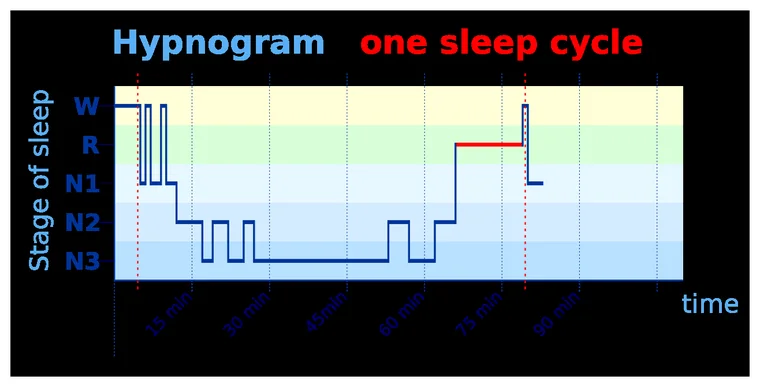
The REM connection is part of what makes catathrenia distinctive. REM sleep is clustered in the second half of the night and lengthens toward morning, which is why partners often report the groaning gets going in the small hours rather than right after lights-out. Seeing where it sits in the night is one of the clues that separates it from snoring, which tends to track body position and airway load rather than a particular sleep stage.
REM sleep (the dreaming stage) is concentrated in the second half of the night and lengthens toward morning — which matches when catathrenia tends to occur. Schlafgut · CC BY-SA 3.0 · Wikimedia Commons
Why it happens (and who gets it)
Honestly, the cause is not fully pinned down. It is linked to the way breathing and the larynx are controlled during sleep — the groan is essentially voice and exhalation overlapping when they normally would not — and it turns up in otherwise healthy people, often younger adults. It is not the same as snoring, and it is not a sign of pain or distress, however mournful it sounds to a worried partner at 4 a.m. Research is still working through possible contributors, including the shape of the airway and the position of the jaw, and a mandibular advancement device (the kind used for snoring) has been trialled as a treatment with mixed, inconsistent results.
It sounds like suffering and is not. The groan is the machinery of breathing and voice overlapping in sleep —
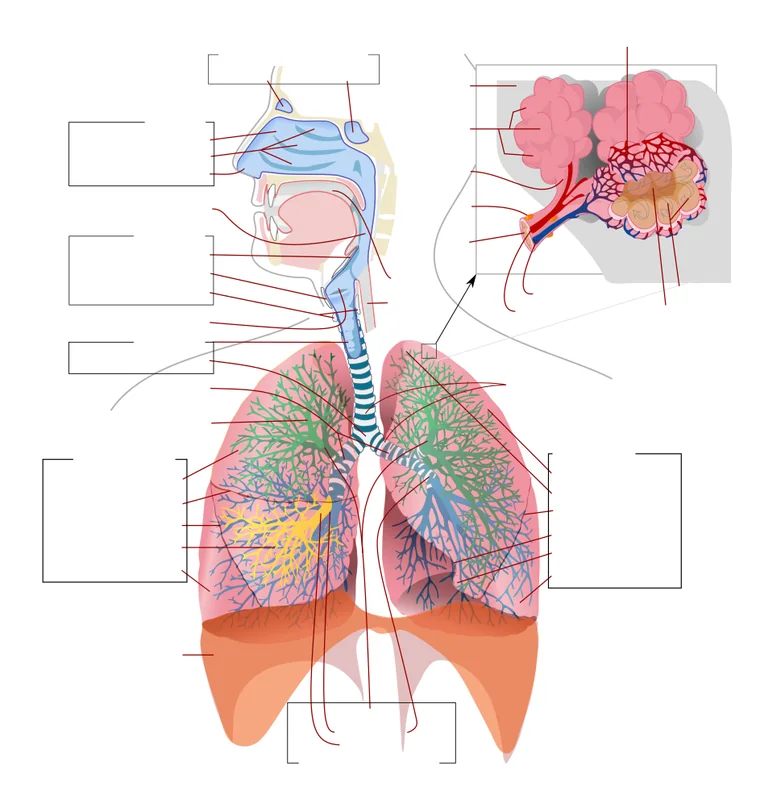
Only the louder, in-breath, pause-and-gasp end is worth screening. Catathrenia sits at the benign end of the scale. Catathrenia is produced in the larynx — the voice box in the upper airway — as breath is released slowly through partly-closed vocal cords. It is a quirk of voice-and-breathing control, not an obstruction like snoring. LadyofHats, Jmarchn · Public domain · Wikimedia Commons
When to see a doctor
Catathrenia is generally benign, so treatment is often unnecessary — but a professional opinion is worth it if the sound is straining a relationship, if there is any real doubt about whether it is catathrenia versus snoring with breathing pauses, or if it comes with gasping, choking, witnessed pauses or daytime tiredness (which point toward sleep apnea instead). A sleep study can tell the two apart cleanly, which matters because their significance is completely different.
Where SleepTrace fits
This is exactly the kind of thing a phone is good at. SleepTrace records the sounds of your night on your iPhone and lays them over your sleep stages, so instead of relying on a bleary partner's best impression you can actually hear the sound, and see whether it lands on the out-breath during REM (more like catathrenia) or comes bundled with inhale-snoring and pauses (worth checking for apnea). It will not diagnose, but it turns a vague "you make a weird noise" into something specific you can act on.
Frequently asked questions
No. Snoring happens on the in-breath and is a rattling, vibrating sound; catathrenia is a long, monotone groan made on the out-breath. Snoring can come with breathing pauses and unrefreshing sleep, whereas catathrenia usually does not disturb the sleeper's own rest.
Catathrenia is generally harmless and does not usually fragment the sleeper's sleep. It is worth a doctor's opinion mainly if it is disrupting a partner, if it might actually be snoring with apnea, or if it comes with gasping, choking or daytime tiredness.
References
Alonso J, Camacho M, Chhetri DK, Guilleminault C, et al. Catathrenia (nocturnal groaning): a social media survey and state-of-the-art review. J Clin Sleep Med (2017). Europe PMC
SleepTrace is a wellness app, not a medical device. This article is general information, not medical advice. If your symptoms are frequent, severe or worrying, please talk to a doctor.
Hear your own night. SleepTrace turns a night of audio into your sleep phases, the sounds you made, and how it all trends — no wearable, just the iPhone on your nightstand. Download on the App Store →