A hypnic jerk is a sudden, involuntary muscle twitch as you fall asleep, often with a falling sensation. It is completely normal and harmless — one leading idea is that the brain briefly misreads your muscles relaxing as a fall and fires a protective jolt. Caffeine, stress and being overtired make them more frequent; they are only worth checking if the movements are rhythmic, repeated, or happen during deep sleep.
You are sinking into sleep, warm and heavy and almost gone — and then a sharp, involuntary jerk yanks you back. Sometimes it is just a leg or an arm; sometimes the whole body flinches at once. Now and then it comes with a startlingly real half-second of falling, like missing a step on the stairs, and your eyes snap open with your heart briefly going. If this happens to you, welcome to the overwhelming majority of humans: it is called a hypnic jerk, or a "sleep start", and most people get them, many of us regularly.
What a hypnic jerk is
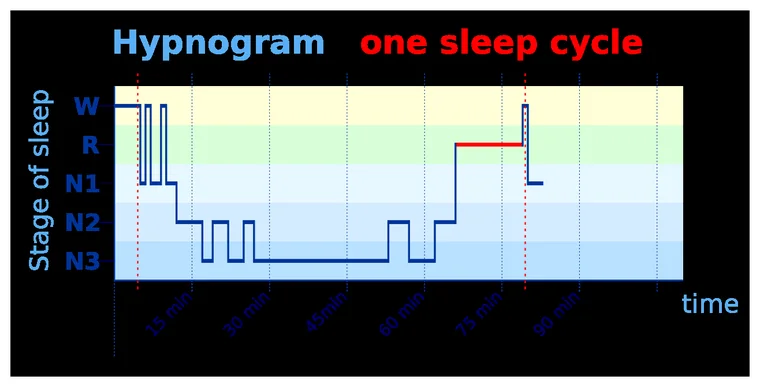
As you fall asleep, control of your muscles is handed over from the awake system to the sleep system, and your muscles let go and relax. These sleep-start twitches are documented in the Wikipedia article on hypnic jerks. The prevailing theory is that occasionally this handover is a little clumsy. The brain briefly misreads that sudden loss of muscle tension as the body falling, and fires off a fast, protective jolt to "catch" you — an ancient reflex that may date back to a time when dozing in a tree meant a real risk of dropping out of it. That is why the twitch so often comes bundled with a falling dream image: the dream is your brain's instant, after-the-fact story to explain the jerk it just produced.
It is a physiological hiccup at the sleep boundary — not a seizure, not a warning sign, and not related to anything sinister. It belongs to the same family of harmless edge-of-sleep events as exploding head syndrome and hypnagogic hallucinations, all of which happen in that same drowsy border zone as you cross from wake into sleep.
What makes them worse
Hypnic jerks are normal at any frequency, but a few things reliably crank them up:
- Caffeine and nicotine, especially in the afternoon and evening — stimulants leave the nervous system primed to twitch.
- Stress and anxiety — a wired, alert nervous system does not power down smoothly.
- Being overtired — ironically, severe sleep deprivation tends to make them more frequent, not fewer, because the descent into sleep becomes abrupt and disorganised.
- Vigorous late exercise that leaves the body still activated at bedtime.
Trim the evening stimulants, give yourself a genuine wind-down instead of doom-scrolling until your eyes close, and most people notice fewer jerks within a week or two.
The one thing worth distinguishing
A hypnic jerk is a single, whole-body startle right as you drop off. That is different from movements that repeat rhythmically through the night, or an urge to move your legs that keeps you from falling asleep in the first place — those describe periodic limb movements and restless legs, which are separate conditions with their own management. The table below is a quick way to tell the harmless startle from the patterns worth mentioning to a doctor.
When to check with a doctor
Hypnic jerks themselves need no investigation. But see a doctor if the movements happen during established sleep rather than just at the edge of it, if they are rhythmic or repeated, if a nightly urge to move your legs is delaying sleep, or if you ever bite your tongue, wet the bed, or wake up confused after an episode. Those features suggest something other than a simple sleep start.
Where SleepTrace fits
A single hypnic jerk needs nothing but reassurance. But if you are jerking awake repeatedly and your nights feel broken, it is worth seeing whether something is genuinely fragmenting your sleep. SleepTrace maps your sleep stages and the sounds of your night from your iPhone, so you can tell an occasional harmless sleep start from a truly restless, interrupted night that deserves a closer look.
Frequently asked questions
It is a hypnic jerk — a normal, involuntary muscle twitch that happens as your body relaxes into sleep. One theory is that the brain briefly misreads the sudden relaxation as falling and fires a protective jolt, which is why it often comes with a falling sensation or dream.
Almost never. They are one of the most common and harmless sleep phenomena. They are worth checking only if the movements are rhythmic or repeated, happen during deep sleep rather than at the edge, or come with tongue-biting, bed-wetting or confusion — features that point to a different condition.
References
- Chandarana M, Saraf U, Divya KP, Krishnan S, et al. Myoclonus — a review. Ann Indian Acad Neurol (2021). Europe PMC
SleepTrace is a wellness app, not a medical device. This article is general information, not medical advice. If your symptoms are frequent, severe or worrying, please talk to a doctor.
Hear your own night. SleepTrace turns a night of audio into your sleep phases, the sounds you made, and how it all trends — no wearable, just the iPhone on your nightstand. Download on the App Store →