You can track sleep without a watch or ring by using your phone: a bedside app captures the night's audio and movement and turns it into your sleep stages and the sounds you made. It avoids charging a device, wearing something to bed, and handing over biometric data. SleepTrace does this on an iPhone.
Sleep tracking has quietly become synonymous with wearing something to bed — a watch, a ring, a band. But plenty of people do not want to charge yet another device, sleep with metal on their finger, or hand a company a continuous stream of their heart rate. The good news is that you do not have to. Your phone, sitting on the nightstand, can tell you a great deal about your night — and in one important respect, more than a wearable can.
Set expectations with a real figure: sleep staging outside a sleep lab is always an estimate. A 2026 study in Frontiers in Neuroscience found 77.1% accuracy for a cardiorespiratory wearable staging sleep at home against the clinical standard. Phone-based tracking sits in the same territory — good enough to reveal patterns across weeks, not a diagnostic instrument.
How to track sleep without a wearable: phone-based tracking
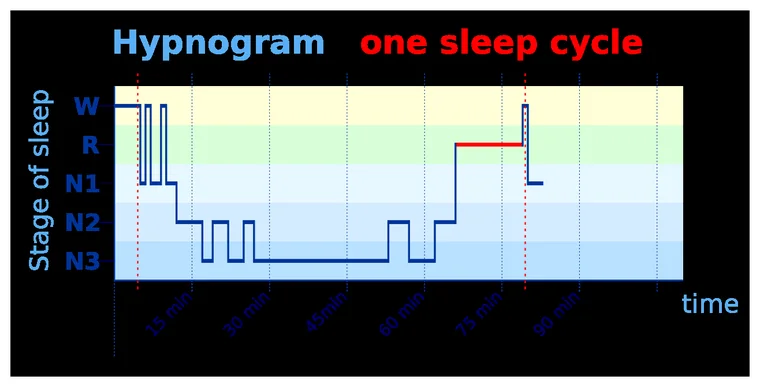
A bedside app uses the phone's microphone (and sometimes its motion sensors) to capture what happens through the night — the sounds you make and how much you move — and turns that into an estimate of your sleep stages and a record of events like snoring or talking. This contactless approach fits into the Wikipedia article on consumer sleep tracking. No contact with your body required; the phone just listens and watches from arm's length.
What phone tracking is good at — and its limits
Honesty helps here. No consumer method — wearable or phone — measures sleep as precisely as a lab, and all of them are better at "asleep versus awake" than at pinpointing exact stages. Where a phone genuinely pulls ahead is the audio: it catches the snoring, the pause-and-gasp of a breathing event — the pattern at the centre of sleep apnea testing at home — the sleep talking and grinding that a wrist sensor is simply blind to. Where a wearable pulls ahead is continuous heart-rate and all-day activity. For understanding your nights specifically, hearing them is a real advantage.
What to look for in a phone tracker
- It maps sound to sleep stage, so you can jump to events instead of scrubbing hours.
- It runs offline and keeps recordings on the device — bedroom audio is sensitive data.
- It survives the night without the screen on and without draining the battery.
- It shows trends over time, not just last night in isolation.
Why trends matter more than any single night
Whatever tool you use, the biggest mistake is judging your sleep by one night's numbers. Everybody has bad nights, and a single reading — from a phone, a ring or a watch — is noisy and easy to over-interpret. The value is in the trend: what your sleep looks like across a week or a month, and whether a change you made actually moved it. Did cutting the evening wine lift your deep sleep over two weeks? Did a consistent bedtime reduce your night-time wake-ups? Those are questions a single night cannot answer but a trend can. This is where phone-based tracking is genuinely handy, because it makes long-run tracking effortless — there is nothing to remember to charge or wear, so the data just accumulates. Watch the direction of travel, not last night's score, and you will learn far more about what your sleep actually responds to.
How a good sleep diary actually looks
The value of a diary is not the counting; it is the pattern it reveals over time. Keep it to five fields so it survives your enthusiasm: bedtime, estimated wake time, total wake-ups, a one-to-ten restedness score on waking, and anything worth a note (late coffee, alcohol, a stressful day, a bad mattress night). Fill it in within ten minutes of waking, before the day rewrites your memory of the night.
Review it weekly, not daily. The question you are answering is never "was last night good?" — it is "what makes nights good for me, over and over?" One late-night coffee will show up as a pattern after a month, and a mattress or room-noise problem shows up as the same dip night after night. That is the same signal a wearable turns into a fancy chart — you simply collect it by hand and read it with your eyes instead of an app.
If you want the objective layer that a diary cannot give you — the sounds of your night and the honest structure of your sleep — a phone-based option and a diary work well together, which is exactly where recording yourself sleeping comes in.
Where SleepTrace fits
SleepTrace is a wearable-free sleep tracker built around exactly this idea: leave your iPhone on the nightstand, and it turns a night of audio into your sleep stages, the sounds you made, and how they trend — no ring to charge, nothing on your wrist, recordings kept private on the device. If you have resisted sleep tracking because you did not want to wear anything, this is the version that fits.
Frequently asked questions
Yes. Your phone can do it: a bedside app captures the night's audio and movement and estimates your sleep stages on-device. No watch, ring, or band needed.
For the things that matter most — whether you snore, gasp, or talk, and roughly when — a phone's microphone is very informative. Stage estimates are less precise than medical-grade EEG, so the sound-based signals are the reliable part.
On-device processing (so your audio never leaves the phone), a clear privacy policy, and output you can actually act on — like when you snored and how much, rather than just a daily score.
References
- Davidson S, Carter JF, Stanyer EC, et al. Longitudinal cardiorespiratory wearable sleep staging in the home. Front Neurosci (2026). Europe PMC
- Robbins R, Weaver MD, Sullivan JP, et al. Accuracy of three commercial wearable devices for sleep tracking in healthy adults. Sensors (Basel) (2024). Europe PMC
SleepTrace is a wellness app, not a medical device. This article is general information, not medical advice. If your symptoms are frequent, severe or worrying, please talk to a doctor.
Hear your own night. SleepTrace turns a night of audio into your sleep phases, the sounds you made, and how it all trends — no wearable, just the iPhone on your nightstand. Download on the App Store →