You get more deep sleep mainly by protecting the first half of the night: keep a consistent schedule, cut evening alcohol and late caffeine, exercise but not too late, and keep the room cool and dark. Because deep sleep is front-loaded, an earlier, regular bedtime helps most — and treating snoring or breathing pauses removes a common thief of it.
Deep sleep is the stage everyone wants more of, and for good reason — it is the physically restorative part of the night, when the body repairs itself and the brain clears out and consolidates. The frustrating catch is that you cannot will yourself into it, and you cannot feel how much you got. (If your complaint is the opposite — that your sleep is so deep you cannot wake — that is a different question, answered in what being a heavy sleeper actually means.) But you can absolutely shape the conditions that produce it, and most of the wins come from one principle: protect the first third of the night.
How to get more deep sleep: why timing is everything
Deep sleep is not spread evenly across the night. It is front-loaded — you get the biggest, deepest doses in the first few hours after falling asleep, and progressively less as the night goes on and REM takes over toward morning. That single fact drives most of the practical advice: anything that delays or fragments the early part of your night costs you deep sleep disproportionately. For the full picture of what the stages of sleep are and why deep sleep matters, the Wikipedia deep sleep article is a good primer.
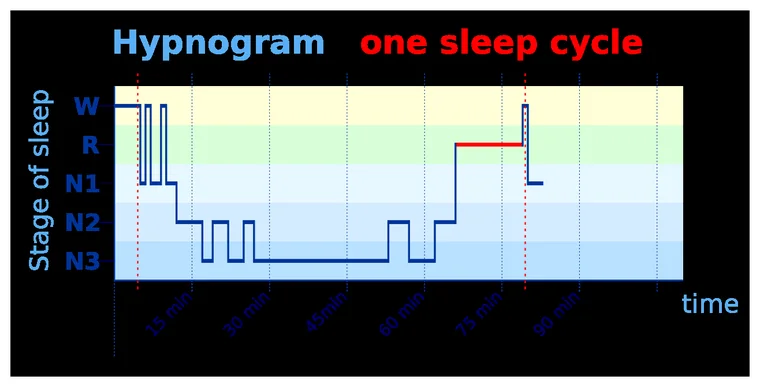
What actually increases deep sleep
- A consistent schedule. Going to bed and waking at steady times keeps your body clock aligned so deep sleep lands when it should. This is the single biggest lever. (It is one pillar of the broader set of sleep hygiene habits that reliably improve rest.)
- Cut evening alcohol. It may knock you out, but it suppresses deep sleep and fragments the second half of the night.
- Mind your caffeine. It lingers for many hours; an afternoon cut-off protects the early-night deep stages.
- Exercise — but not too late. Regular daytime activity deepens sleep; a hard workout right before bed can do the opposite.
- Cool, dark, quiet. A slightly cool room in particular helps the body drop into deep sleep.
The two forces you are actually working with
Behind all of that advice are two systems. One is your build-up of sleep pressure through the day; the other is your body clock. Deep sleep is best when high sleep pressure meets a well-aligned clock at bedtime — which is exactly why a regular schedule and a proper wind-down (rather than caffeine-masked exhaustion) work so well.
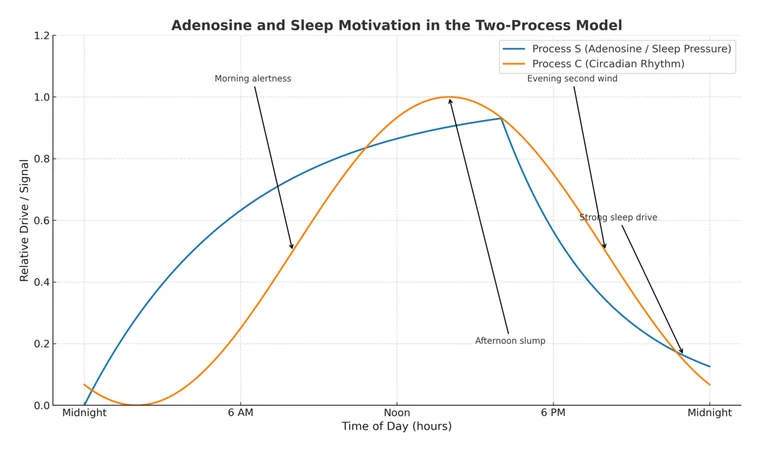
The thief most people miss
Here is the part good habits alone will not fix: snoring and breathing pauses repeatedly drag you out of deep sleep without ever fully waking you. You can do everything right and still lose deep sleep to an airway problem you cannot feel. If you are optimising hard and still waking unrefreshed, that is the suspect to rule out — see is sleep apnea dangerous.
Myths that waste your effort
A few popular ideas about deep sleep are worth clearing away, because chasing them wastes energy. "More total sleep means more deep sleep" is only loosely true — deep sleep is front-loaded and largely capped early, so sleeping in mostly adds light sleep and REM, not more deep sleep. "A nightcap helps me sleep deeply" is backwards: alcohol sedates you but actively suppresses deep sleep. Supplements and pillow sprays marketed for "deep sleep" mostly lack good evidence for genuinely increasing the deep stages, whatever the packaging says. And you cannot bank deep sleep in advance or force it through willpower. The unglamorous truth is that the boring levers — regular timing, a cool dark room, less evening alcohol, treating anything that fragments the night — are the ones that actually work, and the flashy shortcuts mostly do not. Put your effort where the evidence is, and ignore the rest.
Where SleepTrace fits
The honest problem with all deep-sleep advice is that you cannot feel your deep-sleep share, so you cannot tell what is working. SleepTrace maps your sleep stages from a night of audio on your iPhone and trends them over time, so you can actually see whether a consistent bedtime or cutting the evening wine moved the needle. And because it listens, it can flag the snoring and pauses quietly stealing your deep sleep — the one thing better habits alone will not catch.
Frequently asked questions
Protect the first half of the night, where deep sleep is concentrated: keep a consistent sleep schedule, cut evening alcohol and late caffeine, and avoid eating too late. Temperature and noise also matter.
A regular bedtime, cooler room, and no alcohol in the evening are the most reliable levers. Exercise during the day helps, but evening alcohol — often mistaken for a sleep aid — is the thief most people miss.
That you can 'force' more of it with supplements or by staying in bed longer. Deep sleep is driven by timing and sleep pressure; the practical wins are behavioral, not pharmaceutical.
References
- Liu J, Chen D, Xia T, et al. Slow-wave sleep and REM sleep differentially contribute to memory representation. (2025). Europe PMC
SleepTrace is a wellness app, not a medical device. This article is general information, not medical advice. If your symptoms are frequent, severe or worrying, please talk to a doctor.
Hear your own night. SleepTrace turns a night of audio into your sleep phases, the sounds you made, and how it all trends — no wearable, just the iPhone on your nightstand. Download on the App Store →