Waking around 3am is usually normal — you naturally surface between sleep cycles in the lighter second half of the night and simply notice it. It becomes worth attention when something wakes you (a breathing pause, reflux, alcohol wearing off, anxiety) or you cannot fall back asleep. What happens in the moments before the wake-up is the useful clue.
You surface at 3am, wide awake, and it feels wrong — the house silent, the night endless, your brain suddenly wide open for business. Then it happens again the next night, and the next, and you start to wonder what is going wrong. Here is the first reassurance: waking in the small hours is one of the most normal things a sleeping human does. Whether it is a problem depends entirely on why you woke and what happens next.
Why do I wake up at 3am: the natural night-time wake
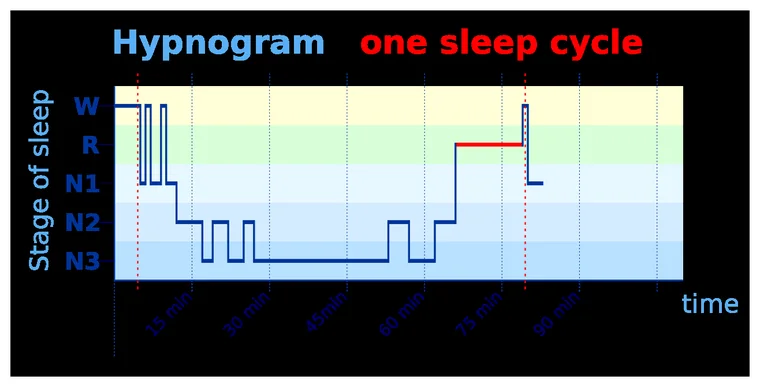
Sleep is not one long dive; it is a series of cycles, each around 90 minutes, that repeat through the night. The repeating architecture of these cycles is nicely laid out in the Wikipedia article on sleep cycles. Between cycles you rise close to the surface, and in the second half of the night — roughly the 3am window — your sleep is naturally lighter and richer in dreaming REM. (That cycle architecture is also why splitting sleep into scattered naps — polyphasic sleep — fights the body instead of working with it.) So you drift near waking again and again, and most of the time you slip straight back under without ever knowing. Noticing it does not mean something broke; it often just means a full bladder, a noise, or a stray worry caught you at a light moment.
When the 3am wake-up means more
The wake-up is worth attention when something is actively rousing you, or when you cannot get back to sleep. The common triggers:
- A breathing pause (sleep apnea) — surfaces you with a gasp or a pounding heart, usually after snoring. Worth ruling out if you wake tired.
- Alcohol wearing off — it knocks you out, then rebounds a few hours later with a wired, racing-heart wake-up. A famously reliable 3am alarm.
- Acid reflux — a sour taste and a cough or choke.
- Anxiety and a racing mind — you wake at a light moment and the brain immediately starts churning, which is what actually keeps you up.
- Needing the loo, an over-warm room, light, or noise.
The two-part problem: waking, and staying awake
It helps to separate the wake-up from the not-getting-back-to-sleep, because they have different fixes. Brief surfacings are normal and need nothing. The distress comes from lying there for an hour. The classic advice actually works: if you are not back asleep within about twenty minutes, get up, keep the lights low, do something dull, and return when sleepy — rather than watching the clock and feeding the frustration.
When to see a doctor
Talk to a doctor if you wake gasping or with a pounding heart, if a partner reports snoring and pauses, if the wake-ups leave you exhausted despite enough hours, or if a persistently churning mind at 3am is part of a broader low mood or anxiety. Those point to something treatable rather than just a restless night.
The anxiety loop that turns a normal wake-up into a bad night
For a lot of people the real problem is not the waking — it is what the mind does with it. You surface at a light moment, glance at the clock, and a single unhelpful thought lands: not again, I'll be wrecked tomorrow. That thought triggers a small stress response, the stress response makes sleep harder, and now you are wide awake for an hour, which "proves" the fear right. It is a self-fulfilling loop, and the way out is to starve it rather than fight it. Turn the clock away so you cannot calculate how little sleep is left. Resist doing anything stimulating. Remind yourself that lying restfully in the dark is itself worth something, and that one broken night is not a catastrophe. Taking the pressure off the wake-up is often what quietly ends the pattern — because much of what kept you awake was the alarm about being awake.
Where SleepTrace fits
The whole game is figuring out what woke you — and you slept through it. SleepTrace records your night on your iPhone and lines the sounds up with your sleep stages, so you can scroll to a 3am wake-up and hear whether it followed snoring and a gasp, or nothing at all. That single detail separates "my body woke me" from "my mind kept me up", which is the difference that decides what to do about it.
Frequently asked questions
Often yes. Your sleep naturally gets lighter in the second half of the night, and you surface briefly between cycles 10–20 times. Around 3am, your last sleep stage has typically finished, so the chance of waking and noticing it is higher.
Two habits: checking the time, which starts mental math about remaining hours, and turning on a light or phone screen. Both raise alertness and make it harder to fall back asleep, which can turn a normal wake-up into a bad night.
If you wake most nights and cannot fall back asleep, feel unrefreshed during the day, or wake gasping or with a racing heart, it is worth mentioning — it can signal anxiety, poor sleep quality, or breathing-related sleep problems.
SleepTrace is a wellness app, not a medical device. This article is general information, not medical advice. If your symptoms are frequent, severe or worrying, please talk to a doctor.
Hear your own night. SleepTrace turns a night of audio into your sleep phases, the sounds you made, and how it all trends — no wearable, just the iPhone on your nightstand. Download on the App Store →