A 4am wake-up that repeats night after night is usually circadian, not random: it sits near the daily low point of your core body temperature, right as cortisol starts climbing and sleep grows lighter and easier to break. That's a different mechanism from a one-off midnight surfacing, and the fix is mostly about light exposure and schedule consistency, not anxiety management. See a doctor if you can't fall back asleep and it's wrecking your days.
I'll say the unpopular thing first: if you're waking at 4am on the dot, night after night, it is probably not your anxious brain "choosing" 4am. Anxiety can absolutely keep you up once you're awake — but the clockwork precision, the same narrow window week after week, is a body-clock signature, not a psychological one. The body clock behind this timing is explained in the Wikipedia article on circadian rhythms. That distinction matters, because it changes what actually fixes it.
Why do I wake up at 4am specifically — not just 'the middle of the night'
Your sleep is governed by two overlapping systems: how long you've been asleep (sleep pressure) and where you sit on your 24-hour body clock (circadian rhythm). For most adults on a fairly normal schedule, the small hours before dawn are when core body temperature bottoms out and cortisol — the hormone that helps switch you on for the day — starts its climb back up. Sleep is naturally at its most fragile right at that crossover point: lighter, thinner, and more easily broken by something small. That's the mechanism behind a precise, repeating 4am wake-up, and it's a different animal from the general "surfacing between sleep cycles" that explains a 3am wake-up — this one is clock-driven, not cycle-driven.
Why the same time, night after night
If you keep a reasonably regular schedule, your body clock repeats that low-temperature, rising-cortisol crossover in almost the same clock-time window every single night. That's exactly why the wake-up feels suspiciously precise — it isn't a coincidence, it's a clock doing its job with unnerving consistency. The flip side is useful: because it's clock-driven, it responds to clock-level fixes, not just "better sleep hygiene" in the abstract.
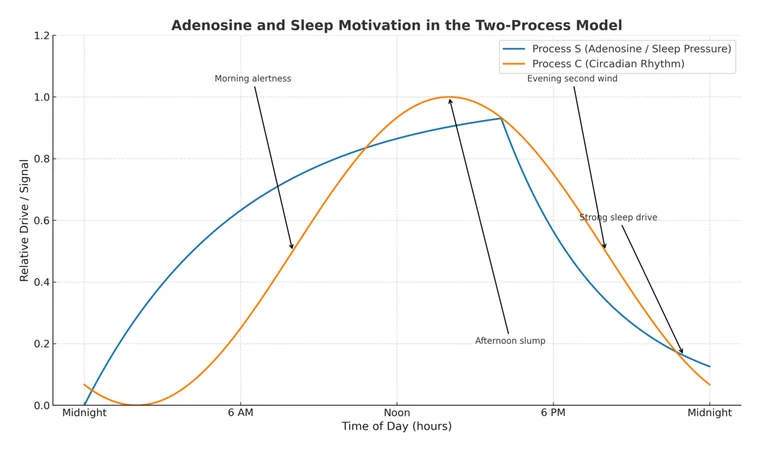
Light is doing more than you think
Here's the part most sleep advice skips: in late spring and summer, thin curtains and an early dawn genuinely nudge your body clock earlier, night by night, without you noticing why you're suddenly waking before your alarm. It's not in your head — it's photons hitting your retina through curtains you assumed were "good enough." If your 4am wake-ups get worse as the days get longer, that's your answer before you reach for anything else. Blackout curtains are a boring fix, but they're disproportionately effective for exactly this pattern.
When it's not just the clock
A few other things reliably show up in this window, and it's worth being honest about which of these is actually you:
- Alcohol rebound — a drink or two in the evening speeds up sleep at first, then wears off a few hours later with a jolt of lighter, wired sleep. If your last drink lands around midnight, 4am is prime rebound territory.
- An irregular schedule — inconsistent bed and wake times (including "catching up" on weekends) drag the crossover point around, which paradoxically makes the wake-up less predictable, not more forgiving.
- A bedroom that's warming up — right when your body wants its temperature to be at its lowest, a room that's crept warm overnight works directly against you. (The ideal range is in the best temperature for sleep.)
- Caffeine later than you think — even an afternoon coffee can still have real levels in your system at 4am for slow metabolizers.
When to see a doctor
Occasional early waking is normal. It's worth a conversation if it happens most nights, if you can't fall back asleep within twenty to thirty minutes, or if it's paired with low mood, appetite changes, or exhaustion that doesn't lift — early-morning waking that won't budge is also a recognized marker of clinical depression, and that's a different problem with a different fix than a curtain.
Where SleepTrace fits
Because a true circadian 4am wake-up is quiet — there's no snore, no gasp, nothing external — it looks very different on a recording from a noise-triggered wake-up. SleepTrace records your night on your iPhone and lines it up with your sleep stages, so you can check whether your 4am mornings are silent (clock-driven, respond to light and schedule fixes) or preceded by a sound you slept through (a different problem entirely). If the wake-ups are leaving you generally exhausted, sleep deprivation symptoms is worth a read too.
Frequently asked questions
Not by itself. A repeating, precise 4am wake-up is usually your body clock's normal low-temperature, rising-cortisol crossover point, and most people slip back to sleep. It's worth checking with a doctor if you can't get back to sleep, it happens most nights, or it comes with low mood or persistent daytime exhaustion.
Because it's driven by your circadian clock, not chance. On a fairly regular schedule, your core body temperature bottoms out and cortisol starts rising in almost the same clock-time window every night, and sleep is naturally lighter and easier to break right at that crossover — which is exactly what makes the timing feel so precise.
References
- Soehner AM, McClung CA. A primer on circadian rhythms for psychiatry. NPP Digit Psychiatry Neurosci (2026). Europe PMC
SleepTrace is a wellness app, not a medical device. This article is general information, not medical advice. If your symptoms are frequent, severe or worrying, please talk to a doctor.
Hear your own night. SleepTrace turns a night of audio into your sleep phases, the sounds you made, and how it all trends — no wearable, just the iPhone on your nightstand. Download on the App Store →