The REM sleep behavior disorder melatonin question comes down to this: melatonin is one of two first-line drug options, and the American Academy of Sleep Medicine's 2023 guideline suggests immediate-release melatonin over no treatment — with a conditional strength of recommendation, meaning the evidence supports trying it rather than proving it works. The case for it rests mostly on small, mostly uncontrolled studies plus an unusually clean safety and interaction profile, which matters because most people with RBD are older and already on several medications. The formulation is not a detail: the guideline specifies immediate-release, and the largest randomized trial to date used prolonged-release melatonin at 4 mg in 30 people with Parkinson's disease and found no difference from placebo — 3.4 episodes a week on melatonin versus 3.6 on placebo. In a four-week head-to-head trial in isolated RBD, prolonged-release melatonin did not reduce REM sleep without atonia while clonazepam did, but melatonin reduced daytime sleepiness and insomnia symptoms where clonazepam increased depressive symptoms. Melatonin is a reasonable first attempt, not a proven one, and it never replaces making the bedroom safe.
If you have just been told you have RBD and offered melatonin, you have probably also noticed that melatonin is sold in gas stations. That contrast is confusing, and it deserves a straight answer rather than reassurance: melatonin is genuinely one of the two standard options for this condition, it is genuinely suggested by the American Academy of Sleep Medicine, and the evidence behind it is genuinely thinner than you would expect for a first-line treatment.
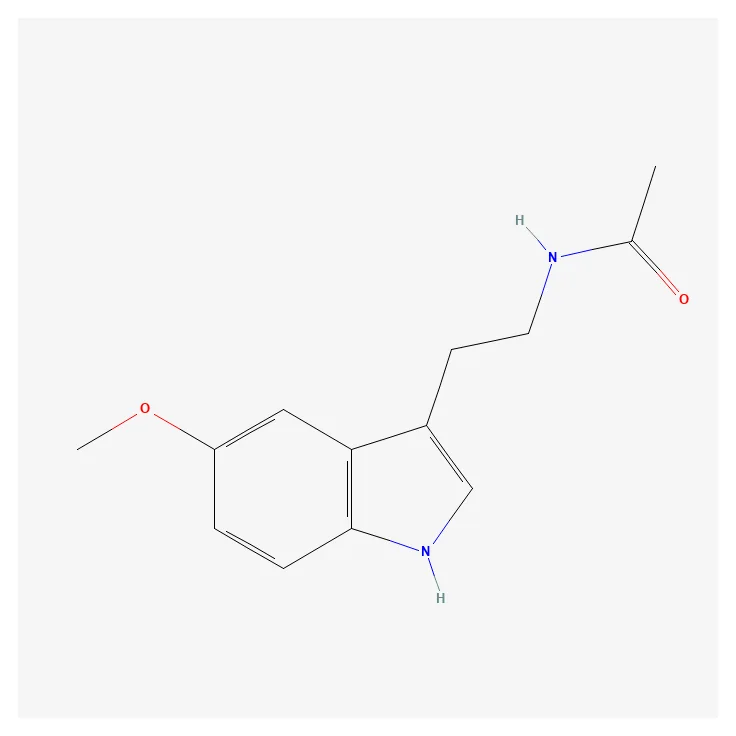
All three of those are true at once. Here is how they fit together. The general pharmacology of the molecule is covered on Wikipedia's melatonin page; this page is only about RBD.
The REM sleep behavior disorder melatonin question, and how it became a first-line option
The AASM's 2023 guideline suggests that clinicians use immediate-release melatonin, versus no treatment, for isolated RBD in adults. The strength assigned to that recommendation is conditional, and the guideline is explicit about what conditional means: the clinician has to use judgment and take the patient's values and preferences into account, rather than apply it as a default. Every drug recommendation in that guideline for RBD is conditional. None is strong.
What put melatonin on the list is a combination of two things. A critical review of the evidence found that melatonin appears beneficial in RBD, with reductions in clinical behavioral outcomes and a decrease in muscle tone during REM sleep — the thing that is supposed to be switched off and is not. And it noted the second half of the argument plainly: melatonin has a favorable safety and tolerability profile over clonazepam, with limited potential for drug-drug interactions, which the authors flagged as an especially important consideration in elderly people with RBD who are on multiple medications. The same review closed by stating that prospective clinical trials are necessary to establish the evidence basis for melatonin and clonazepam as RBD therapies. That was the state of things in 2015, and it has not changed as much as it should have.
The trial that found nothing, and why it still matters
The largest randomized controlled trial of melatonin for RBD tested prolonged-release melatonin at 4 mg in 30 people with Parkinson's disease, double-blind against matched placebo, over an eight-week intervention with four-week observation periods on either side. The primary outcome was the number of RBD incidents per week, averaged over weeks five to eight, recorded in a weekly diary.
The result: 3.4 events a week on melatonin, 3.6 on placebo. A difference of 0.2, with a 95% confidence interval running from −3.2 to 3.6. The authors' conclusion is one sentence long — prolonged-release melatonin 4 mg did not reduce rapid eye movement sleep behavior disorder in Parkinson's disease.
Two caveats sit on top of that, and both are real rather than face-saving. It tested prolonged-release melatonin, and the guideline recommendation is specifically for immediate-release. And it was conducted in people with Parkinson's disease, who are not the same group as people with isolated RBD. A null result in that population does not automatically transfer. But 30 people is still the biggest randomized trial this treatment has, and it found nothing — which is why "melatonin is the safe, natural first-line option" should be said with less confidence than it usually is.
Melatonin against clonazepam, head to head
One study put them side by side. Thirty-four people with video-polysomnography-confirmed isolated RBD were randomized to either clonazepam 0.5 mg or prolonged-release melatonin 2 mg, taken 30 minutes before bed, for four weeks, with a repeat sleep study at the end. The primary outcome was the change in REM sleep without atonia — the muscle activity that should not be there.
Clonazepam reduced it. Prolonged-release melatonin did not. The clonazepam group also tended to report greater global improvement, though that fell short of significance. But the ledger has another column: daytime sleepiness and insomnia symptoms improved after melatonin and not after clonazepam, while depressive symptoms increased after clonazepam. Clonazepam also shifted the architecture of sleep itself, increasing N2 and reducing both N3 and REM.
So the honest summary is not "clonazepam wins". It is that clonazepam moved the measurable sleep-lab number and melatonin moved how people felt during the day, at a cost on each side. Which of those you would rather have is a real question with a real answer, and it is different for a 58-year-old who drives for a living than for a 76-year-old with a history of falls.
What to actually expect
If you are starting melatonin for RBD, three expectations are worth setting.
- It is not a sedative for this purpose. In RBD, melatonin is being used for its effect on REM motor control, not to make you fall asleep. If you were hoping for a knockout, you will be disappointed by something that may still be working.
- The formulation is on the label and it matters. The guideline says immediate-release. The two trials that came out unfavorably both used prolonged-release. Check which one you have before concluding anything.
- Judge it on injuries and incidents, not on feeling. The trials counted events in a diary, and so should you. A one-line note each morning — anything happen, roughly when, anyone hurt — is the same measurement, and it is what makes the next appointment useful.
And it does not replace step one. Padding the nightstand and clearing the bedside is what the guideline calls critically important; melatonin is what it calls conditional. Keep those in the right order, as laid out in REM sleep behavior disorder treatment.
Do not start melatonin for suspected dream enactment on your own. It is sold over the counter in the US, which makes it easy to skip the part that matters: getting the diagnosis confirmed on a sleep study and a neurological baseline on record. Tell a doctor before starting it if you take an anticoagulant, a blood-pressure medication, an immunosuppressant or an antiseizure drug, if you have epilepsy or an autoimmune condition, or if you are pregnant or breastfeeding. Stop and get advice if you develop daytime grogginess or unsteadiness on waking — falls are the injury that matters most in this age group. And melatonin supplements are regulated as food supplements in the US, so actual content can differ from the label; that is worth raising with a pharmacist.
Where SleepTrace fits
The trials measured melatonin with weekly event diaries, and that is the part you can reproduce at home — an iPhone on the nightstand is enough to keep the same count. SleepTrace logs the night's sounds against your sleep stages, so "was last month quieter than the month before" becomes a chart rather than an impression, which matters most if you sleep alone and have nobody to count events for you. It does not measure muscle tone, so it cannot show the number the sleep lab cares about. For the wider picture, see what REM sleep behavior disorder actually is.
Frequently asked questions
It is suggested as an option, which is not the same as proven. The AASM's 2023 guideline conditionally suggests immediate-release melatonin over no treatment for isolated RBD in adults, and a critical review of the evidence describes reductions in behavioral outcomes and in muscle tone during REM sleep across the available studies. But those studies are mostly small and uncontrolled, and the largest randomized trial, in Parkinson's disease, found no effect. Some people clearly benefit; the field cannot yet say how many.
Enough to matter. The guideline recommendation names immediate-release specifically. The two randomized studies using prolonged-release melatonin came out unfavorably: 4 mg prolonged-release showed no difference from placebo in Parkinson's disease, and 2 mg prolonged-release did not improve REM sleep without atonia in a head-to-head trial against clonazepam. If a melatonin trial has failed for you, it is worth checking which formulation you were taking.
On the available evidence it is better tolerated. A critical review of melatonin therapy for RBD highlights its favorable safety and tolerability profile compared with clonazepam and its limited potential for drug interactions — an important consideration in older people on multiple medications. In the four-week head-to-head trial, the melatonin arm had less daytime sleepiness and fewer insomnia symptoms, while the clonazepam arm had increased depressive symptoms. Safer is not the same as more effective.
That is a conversation with the prescriber, not a number to read online, because it depends on the dose, the formulation and how often episodes were happening to begin with. What helps that conversation is data: the trials in this field typically ran four to eight weeks and counted incidents in a weekly diary, and a simple morning note of whether anything happened, roughly when, and whether anyone was hurt gives your doctor the same kind of evidence.
References
- Howell M, Avidan AY, Foldvary-Schaefer N, Malkani RG, During EH, Roland JP, McCarter SJ, Zak RS, Carandang G, Kazmi U, Ramar K. Management of REM sleep behavior disorder: an American Academy of Sleep Medicine clinical practice guideline.. J Clin Sleep Med (2023). Europe PMC
- McGrane IR, Leung JG, St Louis EK, Boeve BF. Melatonin therapy for REM sleep behavior disorder: a critical review of evidence.. Sleep Med (2015). Europe PMC
- Gilat M, Coeytaux Jackson A, Marshall NS, Hammond D, Mullins AE, Hall JM, Fang BAM, Yee BJ, Wong KKH, Grunstein RR, Lewis SJG. Melatonin for rapid eye movement sleep behavior disorder in Parkinson's disease: A randomised controlled trial.. Mov Disord (2020). Europe PMC
- Byun JI, Shin YY, Seong YA, Yoon SM, Hwang KJ, Jung YJ, Cha KS, Jung KY, Shin WC. Comparative efficacy of prolonged-release melatonin versus clonazepam for isolated rapid eye movement sleep behavior disorder.. Sleep Breath (2023). Europe PMC
SleepTrace is a wellness app, not a medical device. This article is general information, not medical advice. If your symptoms are frequent, severe or worrying, please talk to a doctor.
Hear your own night. SleepTrace turns a night of audio into your sleep phases, the sounds you made, and how it all trends — no wearable, just the iPhone on your nightstand. Download on the App Store →