How long to nap comes down to where you wake in the sleep cycle. A 10–20 minute power nap keeps you in light sleep and refreshes you without grogginess. A 90-minute nap completes a full cycle and leaves you properly rested. The 30–60 minute middle — the 'accidental' nap — wakes you from deep sleep and leaves you groggy, an effect called sleep inertia. Nap in the early afternoon, set a timer, and avoid late naps that steal from the night.
A nap is a tool, and like any tool it depends on how you use it. The single biggest variable is duration — because where in your sleep cycle you wake determines whether the nap refreshes you or leaves you groggier than before. Here is the honest map of nap lengths. The cycle structure behind it is in the Wikipedia article on the sleep cycle.
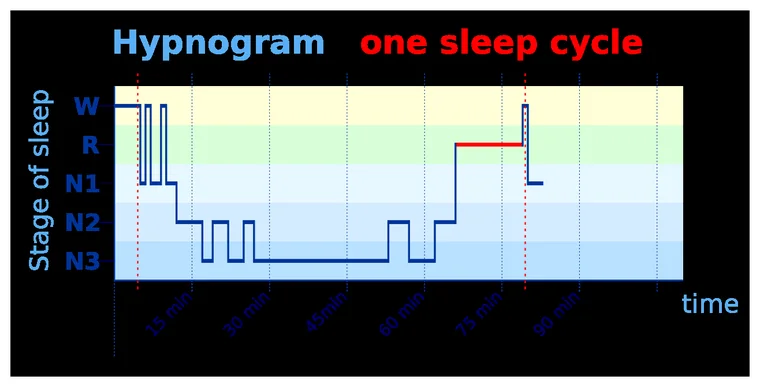
How long to nap: the three zones
- 10–20 minutes — the power nap. You stay in light sleep and wake refreshed, no grogginess. The most reliable choice. Details in the ideal power nap length.
- 90 minutes — the full cycle. You complete a whole sleep cycle and wake at its natural end, properly rested. Good when you are genuinely short on sleep.
- 30–60 minutes — the danger zone. You fall into deep sleep and wake mid-stage, leaving you with sleep inertia — that heavy, foggy feeling that can last an hour. See sleep inertia explained.
When and how to nap
- Early afternoon — roughly 1–3pm — is the natural dip, and napping then is least disruptive to the night.
- Always set a timer. The single most common nap mistake is drifting from a power nap into the danger zone.
- Keep it away from bedtime. A nap after about 4pm starts stealing from your night sleep.
The nap upgrade: the coffee nap
There is a well-tested trick that makes a power nap noticeably stronger: drink a coffee right before you lie down — not after. Caffeine takes roughly 15 to 45 minutes to reach the bloodstream, so it kicks in just as you would otherwise wake from the nap. By the time the afternoon dip would hit you, the caffeine has arrived on top of the restful light sleep, leaving you more alert and less sleepy the hour after waking than either nap or coffee alone. In a driving-simulator study, the combined treatment cut sleepiness-related incidents to about a third of placebo — and to roughly a tenth compared with doing nothing — which is why professional drivers on long haul routes use the technique.
One condition: the coffee has to start working during the nap, so it only makes sense for the short 10–20 minute version. And keep it to caffeine you would otherwise have anyway — the nap trick is not a licence for a late-afternoon double espresso.
Who should be more careful with naps
- If getting to sleep at night is hard. A daytime nap reduces your sleep pressure, so it can make falling asleep that evening even harder. If you struggle with insomnia, skip naps entirely until the night improves.
- Late naps. Anything after about 3–4pm borrows from the coming night. If you anticipate a late evening, the nap may feel good now and cost you later.
- Shift workers. Naps are your strongest survival tool on a night shift, but timing matters more than for a nine-to-fiver — a 10–20 minute nap before the shift, or during a break at its midpoint, protects alertness without wrecking the sleep you get afterwards.
The bottom line
How long to nap is not a mystery: aim for 10–20 minutes if you want a quick refresh, or a full 90 minutes if you are genuinely short on sleep — and avoid the 30–60 minute middle. Set a timer, nap early, and a nap becomes a genuine performance tool instead of a groggy trap.
Why a nap cannot replace a bad night
A nap restores alertness; it does not repair the damage of short sleep. Deep sleep and REM are front-loaded into a proper night in a way that short daytime blocks simply cannot reproduce — a 20-minute nap stays in light sleep by design, and even a 90-minute one covers only a fraction of what the night's full cycle stack provides. This is why medications for sleepiness and fatigue guidelines treat naps as a useful bridge, never as a substitute.
The honest framing: a nap is a performance tool for the afternoon, not storage for the night. If you are napping every day because the nights keep coming up short, the fix is the nightly sleep itself — and the nap, taken at the right length and time, is what carries you through while you fix it. That split — protect the night, rescue the afternoon — is the whole strategy, and it is more honestly effective than treating each day's nap as the main event.
Where SleepTrace fits
Whether your nap stayed in light sleep or slipped into deep sleep is visible in your sleep stages — and that explains exactly why some naps refresh you and others don't. SleepTrace records even short sleeps, so you can find your own ideal nap length in the data instead of guessing.
Frequently asked questions
10–20 minutes for a quick refresh without grogginess, or a full 90 minutes if you're genuinely short on sleep. Avoid 30–60 minutes, which wakes you from deep sleep and leaves you groggy.
Early afternoon, roughly 1–3pm, when the body has a natural dip in alertness — and far enough from bedtime not to disrupt night sleep.
You likely napped 30–60 minutes and woke from deep sleep — the effect is called sleep inertia and can leave you groggy for up to an hour.
Drinking coffee immediately before a 10–20 minute nap. Caffeine takes effect just as you wake, combining the nap's rest with caffeine's alertness boost.
Generally no — a daytime nap lowers your sleep pressure and can make falling asleep at night harder. Prioritize fixing the night first.
References
- Reyner LA, Horne JA. Suppression of sleepiness in drivers: combination of caffeine with a short nap. Psychophysiology (1997). Europe PMC
- Hayashi M, Masuda A, Hori T. The alerting effects of caffeine, bright light and face washing after a short daytime nap. Clin Neurophysiol (2003). Europe PMC
SleepTrace is a wellness app, not a medical device. This article is general information, not medical advice. If your symptoms are frequent, severe or worrying, please talk to a doctor.
Hear your own night. SleepTrace turns a night of audio into your sleep phases, the sounds you made, and how it all trends — no wearable, just the iPhone on your nightstand. Download on the App Store →