A deviated septum can contribute to snoring, but it is rarely the whole explanation. In a Korean national-insurance cohort that followed 11,238 people with septal deviation and 22,476 matched controls for nine years, the septal deviation group had 4.39 times the hazard of being diagnosed with obstructive sleep apnea, a risk that was lower in those who later had septoplasty (hazard ratio 0.71). In a population sample, people with frequent nighttime rhinitis symptoms were significantly more likely to be habitual snorers. Nasal strips, however, did not reduce snoring events in a trial of 20 snorers. Snoring with the mouth closed does not point to one cause. The practical step is to log your nights and see an ENT doctor if the nose is clearly blocked.
Someone told you your nose is crooked, or you saw it in a scan, or you noticed that one side never lets air through, and now you want to know if that is why you snore. It is a fair question. The answer is a careful yes, with a catch: the nose matters, but snoring does not start there alone, and the studies that exist are narrower than the claims made about them.
Can a deviated septum cause snoring? Sometimes, and it is rarely the only cause
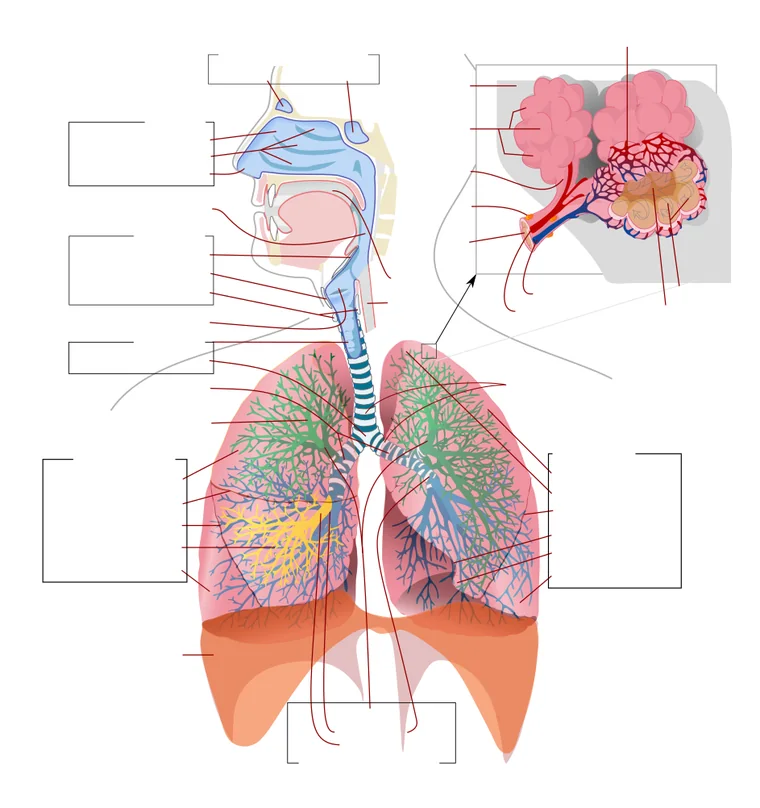
The septum is the thin wall of bone and cartilage that splits the nose into two passages. In many people it sits a little off center, and most never notice. When the shift is large enough to narrow one side, the nose becomes harder to breathe through, and at night that can matter.
Snoring itself is a sound made by soft tissue vibrating in the airway, most often at the back of the throat. The nose is the doorway to that airway. If it is narrow, you pull air through harder, and the pressure downstream gets more negative, so the soft parts behind it collapse more easily. That is the standard explanation, and I give it as an explanation, not as proof that your septum is the culprit.
What the research can show is an association, so let us look at the best of it.
Deviated septum vs sleep apnea: a 9-year cohort
The largest study on septal deviation and sleep apnea I could find drew on a Korean national health-insurance database of one million randomly selected people. It followed 11,238 people with septal deviation and 22,476 matched people without it, for nine years. The outcome was a diagnosis of obstructive sleep apnea, and the hazard in the deviation group was 4.39 times higher (95% confidence interval 3.56 to 5.42). The effect was stronger with higher body mass index. Within the deviation group, those who later had septoplasty had a lower hazard of an apnea diagnosis (0.71, 95% CI 0.54 to 0.94).
Yeom SW, Kim MG, Lee EJ, Chung SK, Kim DH, Noh SJ, Lee MH, Yang YN, Lee CM, Kim JS. Association between septal deviation and OSA diagnoses: a nationwide 9-year follow-up cohort study. J Clin Sleep Med 2021. PMID 34606442
Three honest cautions. It is an insurance database, so the outcome is a recorded diagnosis, not a measured apnea-hypopnea index. People with a known nose problem may be more likely to be sent for a sleep test in the first place. And an association in a population does not tell you what would happen to you. So the deviated septum vs sleep apnea question has a fair answer: they are different things, one a shape and one a breathing pattern, and the shape can raise the odds of the pattern.
Snoring with nose congestion: the population view
Septal deviation is a fixed shape. Congestion comes and goes, and it is far more common. A study from the University of Wisconsin looked at both with a questionnaire sample of 4,927 people and in-laboratory measurements in 911. People who often or almost always had nighttime rhinitis symptoms (five or more nights a month) were significantly more likely to report habitual snoring, which the authors defined as three to seven nights a week. Habitual snorers also had significantly lower airflow than non-snorers. People with allergy-related congestion were 1.8 times as likely to have moderate to severe sleep-disordered breathing.
Young T, Finn L, Kim H. Nasal obstruction as a risk factor for sleep-disordered breathing. The University of Wisconsin Sleep and Respiratory Research Group. J Allergy Clin Immunol 1997. PMID 9042068
That is the nose story in plain terms: a nose that is blocked often enough tends to go with snoring. Cause and effect are not nailed down, and the authors themselves say that further study is warranted, but a modifiable thing like allergy is worth taking seriously.
A smaller recent CT study of 83 adults with simple snoring and nasal obstruction measured the narrowest part of the nose and the throat airway behind it. A larger nasal area went with a modestly larger throat airway: 10 square millimeters more nasal area corresponded to 3.6% more throat area, and the nose explained only a small share of the variation (adjusted R-squared 0.17). The authors warn that this is an anatomical association, not proof of how the airway behaves during sleep.
Kim JW, Cho SW, Kim HJ. Nasal Cavity Dimensions and Pharyngeal Airway Space in Simple Snoring: A Cross-Sectional CT-Based Study. Medicina (Kaunas) 2026. PMID 42796404
Snoring when mouth closed: what it can mean
Plenty of people say they snore with the mouth shut, and many take it as proof of a nose problem. It might be, but snoring with the mouth closed does not point to one cause. A blocked nose would push you to breathe through the mouth, so closed-mouth snoring can also come from a soft palate vibrating while you breathe through a nose that works. This part is plausibility, not a finding from a trial I could verify.
What does have experimental backing is the reverse: in 12 healthy volunteers with normal noses, upper airway resistance during sleep was much higher when they were made to breathe through the mouth (median 12.4) than through the nose (5.2), and obstructive breathing events were far more frequent, with an average apnea-hypopnea index of 43 versus 1.5. The setting was artificial, lying on the back in light sleep, but it explains why the nose is thought of as the better route.
Fitzpatrick MF, McLean H, Urton AM, Tan A, O'Donnell D, Driver HS. Effect of nasal or oral breathing route on upper airway resistance during sleep. Eur Respir J 2003. PMID 14621092
That also frames the question people ask about tape: does mouth taping stop snoring? My separate article on mouth taping goes through the evidence and the risks. Short version: forcing the mouth shut does not make the nose any wider.
Nose clips, nose strips, nasal drops: the evidence is poor
Clips and strips appeal to people who want a cheap fix for the one thing they can see. Two small trials are worth knowing.
In the first, 30 people with sleep apnea and 20 snorers without it tried an external nasal strip. In neither group did the sleep-recording measures change, and in the snorers the frequency of snoring events was unchanged. People did report breathing better through the nose. The authors concluded that the strip cannot be considered a treatment of these conditions. The article is in German; the abstract is English.
Wenzel M, Schönhofer B, Siemon K, Köhler D. [Nasal strips without effect on obstructive sleep apnea and snoring]. Pneumologie 1997. PMID 9487771
In the second, 26 patients with severe sleep apnea (average index 60.7 events per hour) wore a nasal dilator strip and used nasal CPAP in random order. The strip had no significant effect on any measure on the sleep recording, though sleepiness scores fell, which led the authors to describe the strip as an effective placebo. This matters for any nose strip sleep apnea claim: a strip can make you feel better without changing the recording.
Yagihara F, Lorenzi-Filho G, Santos-Silva R. Nasal Dilator Strip is an Effective Placebo Intervention for Severe Obstructive Sleep Apnea. J Clin Sleep Med 2017. PMID 27707442
So does a nasal strip help with snoring? In the one snoring trial I could verify, the count did not move. Both trials were small and old, and the strips are made differently now. For a nasal drop for snoring I found no trial I could verify, and drops and sprays are medicines to talk through with a pharmacist or doctor rather than something I can give a verdict on.
What a panel of ENT experts says, and what your recordings can add
In 2026 an international group of 35 ear, nose and throat experts from 16 countries published a consensus on snoring without apnea. Two points stand out. They recognized nasal obstruction as a treatable companion problem that may be assessed before snoring itself is managed. And they did not consider loudness measurements alone a reliable way to judge how bad snoring is: severity should rest on how often someone snores, what the bed partner complains about and how it affects the couple. For follow-up, the panel supported reassessment every three to six months using a smartphone app or a quality-of-life questionnaire.
Carrichon H, Favier V, Cammaroto G, Dos Santos H, de Vito A, Zancanella E, Cahali MB, Moniri A, Carrasco-Llatas M, Ravesloot M, Alkan U, Cheong RCT, Lechien JR, Maniaci A, O'Connor C, Salamanca F, Jacobowitz O, Abedipour D, Decotte A, Schmitt D, Lestang P, Yona L, Huth J, Bastier PL, Dufour X, De Vries N, Winck JC, Olszewska E, Allali L, Lisan Q, Carsuzaa F. Definition of severity, management, and follow-up of isolated snoring in adults: An international consensus. Eur Ann Otorhinolaryngol Head Neck Dis 2026. PMID 42049645
A recording on the nightstand fits that picture because it answers the frequency question and gives you something to play to your doctor. A sensible nose-focused log looks like this:
- Write one line each evening: stuffy nose or clear, allergy day or not, alcohol or not, which side you started on.
- In the morning, compare nights. Does the snoring cluster on stuffy nights? Does it get louder after you switch sides, which can matter when one nostril is blocked more than the other?
- Bring the pattern, and a few clips, to an ENT visit. That is far more useful than saying you snore a lot.
The microphone cannot see your nose. What it can show is when the sound happens and how it changes, and SleepTrace marks each episode with a loudness reading and a clip you can play. It is not a medical device, and it does not tell you why you snore.
See a doctor, not a gadget, if you also wake up gasping, if a partner sees you stop breathing, if you are very sleepy by day, or if one side of the nose is blocked all the time. A deviated septum is something an ENT doctor can look at in a few minutes, and a sleep study is the way to find out whether apnea is part of the picture. This article is not a diagnosis.
The counter-thesis: when the nose is the wrong suspect
Everything above can be turned around. The Korean cohort's effect was stronger with higher body mass index, so part of what looks like a nose effect may be a weight effect. In the CT study the nose explained only a small share of how wide the throat airway was. Strips that opened the nose did not quiet the snorers, and closed-mouth snoring has several possible sources. If you have been told your septum is crooked, the nose is a fair suspect, but not the only one, and sometimes the better first experiments sit elsewhere: weight, alcohol late in the evening, sleeping position.
A fair split is to keep both lines open. Log the nights to see whether snoring clusters on stuffy ones, and let an ENT doctor judge the anatomy.
One question stays open on the research side. The large cohort counted sleep apnea diagnoses, and the strip trials counted snoring events. I did not find a study that measured snoring loudness before and after septoplasty, which is the question most people with a crooked septum actually have. That is a good thing to ask an ear, nose and throat doctor, with a few weeks of your own notes in hand.
Frequently asked questions
Yes, it can contribute, mainly by making nasal breathing harder so that you breathe through the mouth or pull harder on the throat. It is seldom the only cause, because snoring starts where soft tissue in the throat vibrates, and the nose is only one level of the airway. In a cohort of 11,238 people with septal deviation, the risk of a sleep apnea diagnosis was 4.39 times that of matched controls.
Sometimes, but the studies I could verify are about sleep apnea diagnoses, not snoring volume. In the large Korean cohort the hazard of an apnea diagnosis was lower in people who had septoplasty (hazard ratio 0.71), but that is an observational finding, and an ENT doctor decides whether surgery makes sense for you.
No. A deviated septum is the shape of the wall between the two sides of the nose. Sleep apnea is repeated narrowing or closing of the airway during sleep. The first can make the second more likely, especially with a higher body weight, but you can have either without the other.
Several things can do it: a blocked or narrow nose, congestion from allergies, the soft palate vibrating while you breathe through the nose, or the tongue falling back. The studies do not rank these for individuals, so recordings across several nights, with notes on congestion, are more informative than guessing.
In a trial of 20 snorers without sleep apnea, an external nasal strip left the number of snoring events unchanged, although people felt they breathed better through the nose. A second small trial in severe sleep apnea found no significant effect on the sleep study. Feeling clearer is real, but it is not the same as less snoring.
SleepTrace is a wellness app, not a medical device. This article is general information, not medical advice. If your symptoms are frequent, severe or worrying, please talk to a doctor.
Hear your own night. SleepTrace turns a night of audio into your sleep phases, the sounds you made, and how it all trends. No wearable, just your phone on the nightstand. Get it for iPhone or Android →