Cortisol follows a daily curve: low in the evening and early night, and rising by 50 to 75% in the first 30 minutes after you wake. After a night of sleep loss in young men, evening cortisol was 37% higher (partial deprivation) and 45% higher (total deprivation) the next day, but five nights of 5 to 9 hours in bed did not change the morning rise in 111 healthy men. A small study of 11 people with chronic insomnia found higher ACTH and borderline higher cortisol, read by the authors as hyperarousal. 'Adrenal fatigue' has no support in a systematic review of 58 studies, and a cortisol spike as the cause of 3 a.m. waking is a claim, not a finding. Cortisol cannot be measured with a phone, and a single random test tells little.
The word cortisol has become shorthand for stress in wellness writing, and sleep is where the shorthand is applied most freely. It is said to wake you at three, to make you tired and wired, to be the reason you cannot lose weight. Some of that has a measured basis, most of it has none, and the difference is the useful part.
The sections below cover what the daily cortisol curve looks like, what a short night did to it in two studies, what a small insomnia study found, what the evidence for "adrenal fatigue" amounts to, and which popular claims are not backed by data.
Cortisol and sleep: a daily curve, not a switch
Cortisol is a steroid hormone released in a daily rhythm that is driven by the body's central clock in the hypothalamus. A short review of the field describes it as the main central signal that coordinates the clocks of organs elsewhere in the body, with smaller pulses on top that let the body react quickly to changes in its environment.
O'Byrne NA, Yuen F, Butt WZ, Liu PY. Sleep and Circadian Regulation of Cortisol: A Short Review. Curr Opin Endocr Metab Res 2021. PMID 35128146
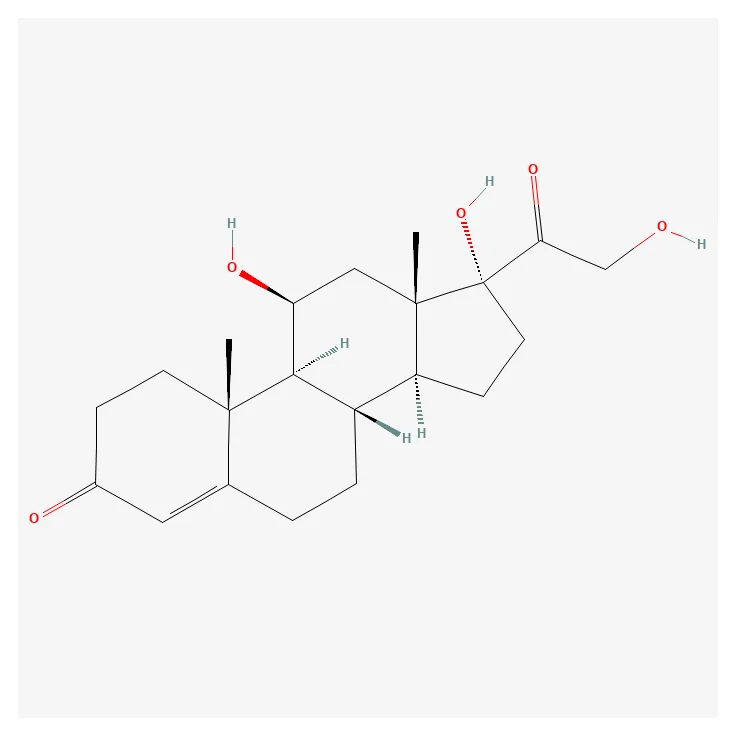
The part of the curve that is easiest to measure is the morning. In three studies with 152 children, adults and older adults, saliva was sampled every 10 to 15 minutes from the moment of waking. Free cortisol rose by 50 to 75% within the first 30 minutes after waking, in both sexes, on all days. Premenopausal women showed a stronger rise with a later peak. Sleep duration, time of waking and alcohol did not seem to affect early-morning levels.
Pruessner JC, Wolf OT, Hellhammer DH, et al. Free cortisol levels after awakening: a reliable biological marker for the assessment of adrenocortical activity. Life Sci 1997. PMID 9416776
One detail from this paper explains why single cortisol readings fool people. The authors concluded that, in contrast to single assessments at fixed times, early-morning cortisol is a reliable marker only when it is measured repeatedly and with strict reference to the time of waking. A sample taken at 8 a.m. by someone who woke at 6 and a sample taken by someone who woke at 7:45 are not the same measurement.
What one short night does to the next evening
The best-known experiment is old and small, and it is still the cleanest. Young men had their cortisol measured for 32 hours under three conditions: a normal night (23:00 to 07:00), a partial night with only 04:00 to 08:00 for sleep, and a night with no sleep at all. Nothing unusual showed up the next morning or during the day. The change appeared in the evening: between 6 and 11 p.m. after the short night, cortisol was 37% higher after partial and 45% higher after total sleep deprivation than on the evening before, and the quiet phase of cortisol secretion started at least an hour later.
The authors read this as a delay in the recovery of the stress-hormone system from its morning peak. They also drew a larger conclusion, that sleep loss may affect resilience to stress. That is an interpretation, and the experiment is a single night.
Leproult R, Copinschi G, Buxton O, Van Cauter E. Sleep loss results in an elevation of cortisol levels the next evening. Sleep 1997. PMID 9415946
A more recent short review agrees on the shape: sleep restriction, when sufficiently substantial, raises late-afternoon and early-evening cortisol but does not change the cortisol total across 24 hours. It adds that prolonged circadian misalignment decreased overall cortisol exposure, which runs against the simple story that disrupted sleep always means more cortisol.
And the morning rise is more stable than people think. In a laboratory study, 111 healthy men spent a baseline night with 9 hours in bed and then seven nights with 5, 6, 7, 8 or 9 hours in bed. The cortisol concentration at waking and the area under the morning curve did not differ between the groups. The authors' conclusion is modest: five consecutive nights of mild to moderate sleep restriction do not appear to affect the cortisol awakening response in healthy men.
Kontou TG, Roach GD, Sargent C. Mild to Moderate Sleep Restriction Does Not Affect the Cortisol Awakening Response in Healthy Adult Males. Clocks Sleep 2022. PMID 36547105
Put together, the picture is narrower than the usual claim. Real sleep loss moves cortisol up in the evening. Modest restriction does not visibly change the morning surge. Neither study was in women or in people with sleep disorders, and neither tells you that your own evening level is high.
Insomnia: more arousal, and a small sample
For people who cannot sleep, the more relevant study compared 11 young people with chronic insomnia and 13 healthy controls matched on age and body mass. After four nights in a sleep laboratory, hormones were measured every so often across 24 hours. The insomniacs had higher ACTH, the pituitary signal that tells the adrenal glands to make cortisol (4.2 against 3.3 pM, p = 0.04), and a cortisol level that ran in the same direction but did not clear the usual threshold (218.0 against 190.4 nM, p = 0.07). The biggest differences were in the evening and the first half of the night. The daily rhythm itself looked normal.
Vgontzas AN, Bixler EO, Lin HM, et al. Chronic insomnia is associated with nyctohemeral activation of the hypothalamic-pituitary-adrenal axis: clinical implications. J Clin Endocrinol Metab 2001. PMID 11502812
Two things to hold on to. The authors read their results as a disorder of hyperarousal in the nervous system, not of sleep loss, and they suggested that the aim of treatment should be to lower overall arousal rather than only to improve the night. And 24 people cannot settle whether high cortisol causes insomnia, follows it or is simply a marker of being tense. This is the kind of study that is quoted far more confidently than its size allows.
If you recognise yourself in the tired-but-wired description, the article on being tired but unable to sleep works through the same feeling from the angle of what you can do at night, and what causes insomnia places hormones among the other factors.
Can lowering cortisol improve sleep?
Wellness pages often treat a lower cortisol level as the route to better sleep. The studies above describe how cortisol behaves around sleep and sleep loss, but none of them tests lowering cortisol as a way to sleep better, so the claim has no direct evidence behind it here. Whether a level is abnormal is a question for a doctor with a properly timed test, not for a product page.
"Adrenal fatigue" deserves its own sentence, because it is the label wellness pages put on being tired and stressed. A systematic review searched for evidence that chronic stress exhausts the adrenal glands and causes tiredness. From 3,470 articles, 58 studies met the criteria, 33 in healthy people and 25 in people with symptoms, and the authors found almost systematically conflicting results, with methods that endocrinologists do not endorse. Their conclusion is blunt: there is no substantiation that adrenal fatigue is an actual medical condition.
Cadegiani FA, Kater CE. Adrenal fatigue does not exist: a systematic review. BMC Endocr Disord 2016. PMID 27557747
That is not the same as saying that tiredness is imaginary or that no hormone disorder exists. Disorders of cortisol production, in either direction, are real and diagnosed with proper tests. The finding is about the popular label.
Does a cortisol spike wake people at 3 a.m.?
A cortisol surge as the cause of waking in the middle of the night is a popular claim, not a finding. The nearest thing is the insomnia study above, which found higher overall arousal and a raised hormone in the first half of the night, not a spike at three. Waking in the small hours has other, better-documented routes: light sleep, a bladder, a partner, an oncoming alarm, a worry. They are covered in why you wake up at 3 a.m., and none of them needs a hormone story.
What you can look at yourself
You cannot see cortisol on a phone, and an app that says it shows your cortisol is guessing. What you can see are the things the studies above link to it: how short your nights were, whether the bad nights cluster, whether the same stretch of the night keeps breaking. A week of recordings shows which nights had snoring, coughing or other sound events, so you can compare a short night with the evening after it. SleepTrace records the night on the phone and marks what it heard; the app has to stay open, with the phone on a charger. It does not measure any hormone and is not a medical device.
For the hormone itself, the advice is the unglamorous one. If you want to know whether your cortisol is abnormal, a doctor can arrange a test timed to the waking hour, which is exactly what the 1997 authors say matters. A random test from a kit at an arbitrary time is the kind of single reading they warned against. For the habit side, the evidence in this article points mostly in one direction: enough sleep at regular times, which is also the answer in sleep deprivation symptoms.
When it is more than a sleep question: weeks of exhaustion that rest does not touch, unexplained weight change, new muscle weakness, easy bruising, high blood pressure, dizziness on standing, or feeling faint should be checked by a doctor. Cortisol disorders are diagnosed with tests, not with sleep patterns or an app.
What this does not settle
Most of the data here come from men in laboratories, over a few nights, with blood or saliva sampled by researchers. They say little about women across the cycle, about shift workers, about people with sleep apnea, or about what happens over months. And a hormone level is a number: the studies do not tell you what an individual level means for how you feel at 3 a.m.
Frequently asked questions
Cortisol follows the body clock: it is low in the evening and during the first part of the night and climbs towards waking. In three studies with 152 people from children to older adults, free cortisol rose by 50 to 75% within the first 30 minutes after waking. That is an average pattern, and single values vary a lot from person to person and day to day.
Sometimes, and mostly in the evening. In a 1997 study of young men, evening cortisol (6 to 11 p.m.) the day after a short night was 37% higher after partial and 45% higher after total sleep deprivation than the evening before. A later study of 111 healthy men found that five nights of 5 to 9 hours in bed did not change the cortisol rise after waking, so the effect depends on how much sleep is lost and when cortisol is measured.
Nothing in these studies shows that lowering cortisol is how anything improves sleep. Cortisol is the body's own signal, and lowering it is a different claim from sleeping better. If you suspect a hormone problem, a doctor can test it properly, with the sample timed to the waking hour.
It is a popular claim, not a finding. What studies do show is that people with chronic insomnia tend to have higher overall arousal and, in one small sample, higher ACTH and cortisol. Whether a cortisol surge wakes anyone at 3 a.m. remains unsupported.
No medical society recognises it, and a systematic review of 58 studies found no substantiation that it is an actual medical condition. Fatigue is real; the label is not a diagnosis. If you are exhausted for weeks, the useful step is a medical check of the common causes.
SleepTrace is a wellness app, not a medical device. This article is general information, not medical advice. If your symptoms are frequent, severe or worrying, please talk to a doctor.
Cortisol needs a blood or saliva test, and no phone can read it. SleepTrace tracks something you can see: how your estimated sleep phases and noises change across stressful and calm weeks. That lets you compare weeks, not hormones; it does not measure stress, temperature or heart rate variability on its own.
Hear your own night. SleepTrace turns a night of audio into your sleep phases, the sounds you made, and how it all trends. Works without a wearable, better with one. Your phone on the nightstand is enough to start. Get it for iPhone or Android →