Crying in sleep in adults is usually dream emotion reaching the body before waking, and it is far more common than people assume — in one study of undergraduates, the share reporting dream-enacting behaviors rose from 35.9% to 98.2% purely depending on how specifically the question was asked, with crying and smiling or laughing among the behaviors women reported more often than men. Laughing in sleep, which has its own name in the literature — hypnogely — is likewise mostly benign: in a case series of ten patients showing it, nine had episodes associated with REM sleep, and the reviewers concluded it presents in the majority of cases as a benign physiological phenomenon tied to dreaming. Grief, stress, recent loss and frequent nightmares all make emotional sleep behavior more likely, and emotion in disturbed dreams is often something other than fear: 30% of nightmares and 51% of bad dreams in one study had a primary emotion other than fear, with sadness prominent among them. It becomes worth a doctor's attention when the emotion comes with vigorous movement out of REM sleep, when episodes appear for the first time in later life, when daytime mood is low, or when nightmares are frequent enough to affect the day. This page is about adults only.
Two versions of the same phone call. In one, a man wakes at 4 a.m. with his face wet and no dream he can recall, and lies there feeling like something happened that he was not invited to. In the other, a woman is told by her partner that she laughed — properly, out loud, for several seconds — and then went straight back to breathing normally. Both are unnerving. Both are, in the overwhelming majority of cases, ordinary.
This page is about adults. Crying in sleep in babies and small children is a completely different subject with completely different causes, and mixing them together helps nobody.
Crying in sleep: what it usually is
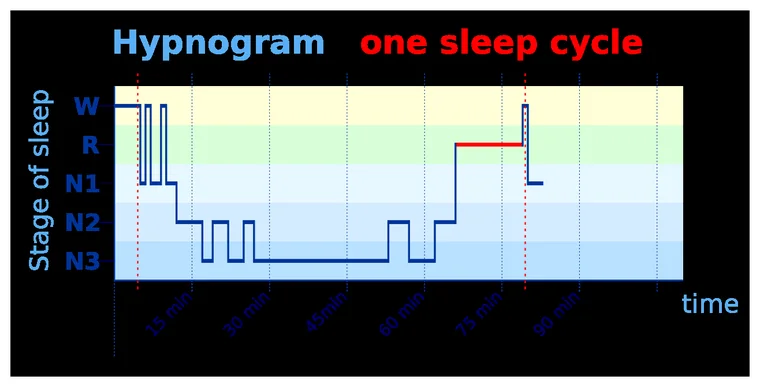
Dreams are emotional events. REM sleep involves strong activity in the brain regions that generate feeling, and the resulting experience is often more emotionally intense than anything in the waking day. Usually the expression of that emotion stops at the neck, because REM sleep comes with muscle paralysis. But breathing, the vocal cords, the face and the tear response are not fully covered by it, which is why sounds and tears get through when kicks generally do not.
So crying in sleep is not the body reporting hidden sadness. It is a dream that got loud enough to reach the parts of you that were still connected. The Wikipedia overview of nightmares covers the disturbing-dream end of this; most sleep crying is not that dramatic.
One study is worth knowing because it reframes the whole question of how common this is. Researchers surveyed three undergraduate samples about dream-enacting behaviors, changing only how the question was asked. A nonspecific question produced a prevalence of 35.9%. The same question with examples produced 76.7%. Seven questions describing specific behaviors — speaking, crying, smiling or laughing, fear, anger, movement, sexual arousal — produced 98.2%. Women reported more speaking, crying, fear and smiling or laughing than men, and those differences held after controlling for other parasomnias and dream recall.
Laughing in sleep has its own name
The medical term is hypnogely, and it appears in the literature rarely enough that most doctors have never used it. In a Canadian case series, ten patients assessed at a tertiary sleep facility showed sleep laughing; nine of them had episodes associated with REM sleep. The reviewers concluded that hypnogely in the majority of cases presents as a benign physiological phenomenon related to dreaming and REM sleep.
Their description of the dreams behind it is the detail worth carrying away. Typically, they wrote, these dreams are odd, bizarre or even unfunny to the person once awake — and yet they bring a sense of mirth and a genuine behavioral response at the time. That resolves the thing people find most disconcerting about being told they laughed: you are not laughing at a joke you cannot remember. You were in a dream whose internal logic made something hilarious, and the humor does not survive the trip back.
In a minority of cases, that same series noted, sleep laughing is a symptom of a neurological disorder affecting the central nervous system — and in those patients the behavioral character differs, with the sense of mirth usually absent. Two of their ten had a specific attribution: one to REM sleep behavior disorder, one to an NREM arousal parasomnia.
When emotion in sleep is worth a second look
The dividing line is not how intense the emotion is. It is whether the body is moving with it.
A study of 67 consecutive polysomnographic recordings from patients with REM sleep behavior disorder found 14 who repeatedly laughed during REM sleep — 21% of their RBD patients with degenerative parkinsonism, mean age 63. Ten had Parkinson's disease, three multiple system atrophy, one dementia with Lewy bodies. Other behaviors in the same patients included smiling, crying, aggressive behavior, screaming and sleep talking. And nine of the fourteen were depressed during the daytime, which the authors interpreted as a dissociation between emotional expression while awake and during REM sleep.
That is a clinic population, not the general public, and it should not be read as "laughing in sleep means Parkinson's". It should be read as the specific combination that matters: emotional expression plus vigorous movement, plus later life, is the pattern that belongs in front of a doctor. Emotion on its own is not. What dream enactment looks like properly is covered in REM sleep behavior disorder.
Grief, stress and the nights that follow them
Sleep crying clusters around hard periods, and there is nothing pathological about that. Dreams process what is unresolved, and after a loss the unresolved material is overwhelming and unavoidable.
It is also worth knowing that disturbed dreams are not only about fear. In a study where 90 participants logged their dreams for four consecutive weeks and rated the emotions in each, 30% of nightmares and 51% of bad dreams contained primary emotions other than fear. Nightmares were rated significantly more intense than bad dreams. The study does not break down which other emotions those were, but the headline finding is the useful one: the common assumption that a bad dream means a frightening dream is wrong about half the time. Crying in your sleep may simply be the most accurate available response to what you were dreaming about.
The practical implication is patience rather than intervention. Emotional sleep behavior during a grief period usually tracks the grief and eases with it, and four things make that stretch easier.
- Hold the wake time, not the bedtime. A fixed morning anchor keeps REM from bunching into an unstable early-morning block, which is where the most intense dreams land.
- Do not go hunting for the dream. Lying there trying to recover what you were crying about extends the awakening and teaches your brain that 4 a.m. is a working hour.
- Watch the evening alcohol. It suppresses REM early in the night and lets it rebound hard in the second half — exactly the pattern that produces vivid, emotional, badly timed dreams.
- Ask about imagery rehearsal therapy if nightmares repeat. Recurrent nightmares have a specific, well-established psychological treatment, and it is worth naming it by name at the appointment rather than being offered a sleeping tablet.
If you are in one of those periods, grief and sleep covers what the nights typically look like and how long it takes.
Make an appointment if crying or laughing in your sleep comes with movement that could hurt someone — punching, kicking, jumping out of bed — especially if you are over 50, because that combination points toward dream enactment and should be assessed rather than watched. Also see a doctor if nightmares are frequent enough to affect your days or make you avoid sleep, if your mood is low or flat during the day, if episodes started after a traumatic event, if they began after a new medication (antidepressants are a common trigger for dream-enacting behavior), or if a bed partner is being hurt or has become afraid to share a bed. If you have thoughts of harming yourself, treat that as urgent and contact a doctor or a crisis line today rather than waiting for an appointment.
Where SleepTrace fits
Almost everything in this article depends on two facts nobody has: whether it actually happened, and what time. A partner's report is useful and unreliable; sleeping alone leaves you with nothing at all. SleepTrace makes the night audible — an iPhone on the nightstand, the sounds laid over your sleep stages — so a crying episode becomes a timestamp and a clip you can play rather than a wet pillow and a bad feeling, and so you can see whether these nights cluster around particular weeks. It does not interpret dreams and it is not a mental health tool. For the neighboring sounds people search for most, see why do I moan in my sleep.
Frequently asked questions
Most often it means a dream carried enough emotion to reach the body before you woke up. Dreaming involves strong activation of emotional brain regions, and the expression sometimes runs through to the face and voice. It is not a reliable signal of anything specific about your waking life on any single night. What is more informative is the pattern: crying in sleep that starts during a period of grief, high stress or frequent nightmares tends to track that period, and settles as it does.
Laughing in sleep has a name in the medical literature — hypnogely — and in a case series of ten patients who showed it, nine had episodes associated with REM sleep. The reviewers described it as, in the majority of cases, a benign physiological phenomenon related to dreaming: the dreams involved are often odd or bizarre rather than actually funny, and would not seem amusing on waking, but they produce a genuine sense of mirth and a real behavioral response at the time.
Not on its own. Emotional sleep behavior happens in people with no mood problem at all. But it is worth paying attention to the company it keeps: persistent low mood, loss of interest, early-morning waking, and frequent nightmares are the things that make it worth raising with a doctor. In one study of RBD patients who laughed during REM sleep, 9 of the 14 were depressed during the day, which the authors read as a dissociation between daytime and dream emotional expression.
When it comes with movement. Emotion alone — a sound, a wet face, a laugh — is the benign pattern. Emotion combined with punching, kicking, sitting up or leaving the bed points toward a parasomnia that should be assessed, particularly dream enactment in adults over 50. Also get it checked if episodes are new in later life, if nightmares are frequent enough to affect your day, if there is a history of trauma, or if a partner says you seem distressed in a way that does not settle.
References
- Nielsen T, Svob C, Kuiken D. Dream-enacting behaviors in a normal population.. Sleep (2009). Europe PMC
- Trajanovic NN, Shapiro CM, Milovanovic S. Sleep-laughing--hypnogely.. Can J Neurol Sci (2013). Europe PMC
- Siclari F, Wienecke M, Poryazova R, Bassetti CL, Baumann CR. Laughing as a manifestation of rapid eye movement sleep behavior disorder.. Parkinsonism Relat Disord (2011). Europe PMC
- Zadra A, Pilon M, Donderi DC. Variety and intensity of emotions in nightmares and bad dreams.. J Nerv Ment Dis (2006). Europe PMC
SleepTrace is a wellness app, not a medical device. This article is general information, not medical advice. If your symptoms are frequent, severe or worrying, please talk to a doctor.
Hear your own night. SleepTrace turns a night of audio into your sleep phases, the sounds you made, and how it all trends — no wearable, just the iPhone on your nightstand. Download on the App Store →